


Rebars for construction
Transmission Irons
Transmission iron is a special product in the iron and steel sector. If we look at the answer to the question of what is transmission iron in a general framework, we can say that it is cold drawn, round section and 1008 SAE or EN S235Jr quality steels. When we look at their properties, we see how reasonable they are for various procedures. For example, let's talk about its suitability for the welding procedure, which is an important feature. Having a low carbon value, it becomes very suitable for welding application thanks to these properties. On the other hand, they are also suitable materials for machining. They can be simply processed on both CNC and lathe machines, providing both ease of use and efficiency. Steels that are shaped by moulding at room temperature are called transmission steel or cold drawing steel.
Quality : ST37-K - S235JR - ST44-2 - ST52-3 - S275JR
Standard : EN 10060 - DIN 1013
Diameter : 20 - 100 mm
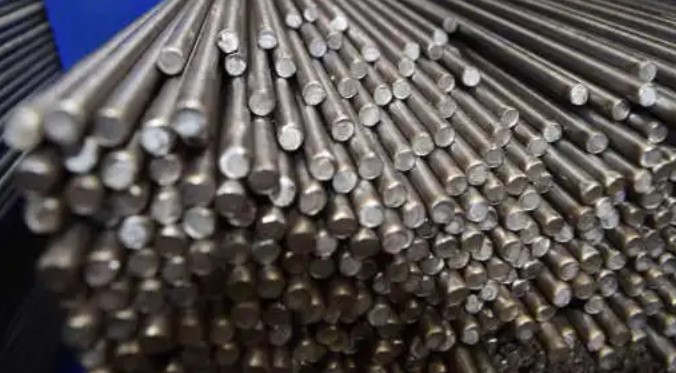
With cold drawing process, it is aimed to increase the yield strength and tensile strength of the material without the need for heat treatment.
-Products have low carbon values. Thanks to these features, their welding capability is very high.
-One of the most important features is that they are economical compared to other steel types.
-The fact that it is easy to perform operations or assembly with transmission shafts makes the shaft preferred in different sectors.
-It is also preferred for the operations to be performed due to the lack of chip removal hardness during the use of transmission shafts.
-The high surface quality of the shafts and smooth shaping are among the features that increase their preference.
-One of the most important features of transmission shafts is their mechanical properties. These properties are easy shrinkage, hardness, impact, shrinkage and elongation.
-Our transmission shafts shrink easily, they are extremely resistant to external impacts. They are also resistant to situations such as shrinkage or elongation. It can ensure that operations can be performed without breaking in tensile situations.
-The heat retention capacity and expansion coefficients of our shafts are also high.
Areas of Use
Quality
S235JR 5437 QUALITY MECHANICAL PROPERTIES
Mechanical Properties | ||||||||||||||||||
Standard Provision | ERDEMİR Quality No | Re (min) N/mm2 ( kg/mm2 ) d(thickness, mm) | Rm(1) N/mm2 ( kg/mm2 ) d(thickness, mm) | A (%) min. d(thickness, mm) | Impact (3) (Longitudinal) | |||||||||||||
A80 | A5 | |||||||||||||||||
<16 | >16 <40 | >40 <63 | >63 <80 | >80 <100 | <3 | >3 <100 | >1 <1.5 | >1.5 <2 | >2 <2.5 | >2.5 <3 | >3 <40 | >40 <63 | >63 <100 | Temperature. °C | KVc J(min.) | |||
Standard | Quality’81 | |||||||||||||||||
EN 10025-2 | S235JR+AR CTB | 5437 | 235 (24.0) | 225 (23.0) | 215 (21.9) | 215 (21.9) | 215 (21.9) | 360-510 (36.7-52.0) | 360-510 (36.7-52.0) | 16 | 17 | 18 | 19 | 24 | 23 | 22 | +20 | 272) |
S275JR 3244 CHEMICAL COMPOSITION Standard: EN 10025-2:2019
Chemical Composition (%) | |||||||||||||||
Standard Provision | ERDEMİR | C d(thickness, mm) | Mn | P | S | Si | Cu | N(1) | CE(IIW) (4) max. (%) | ||||||
Quality No | <16 | 16<d<40 | 40<d<100 | d (mm) | |||||||||||
Standard | Quality | max. | max. | max. | max. | max. | max. | max. | max. | max. | <30 | 30<d<40 | 40<d<100 | ||
EN 10025-2 | S275JR+AR | 3244(1) | 0.21 | 0.21 | 0.22 | 1.50 | 0.035 | 0.035 | - | 0.55 | 0.012 | 0.40 | 0.40 | 0.42 | |
Max. Carbon equivalent (CEV) for S275 and S355 grades can be increased by %0.02 for %Si ≤ 0.04, %0.01 for %Si ≤ 0.25.
S355JR 3252 CHEMICAL COMPOSITION Standard: EN 10025-2:2019
Chemical Composition (%) | |||||||||||||||
Standard Provision | ERDEMİR | C d(thickness, mm) | Mn | P | S | Si | Cu | N(1) | CE(IIW) (4) max. (%) | ||||||
Quality No | <16 | 16<d<40 | 40<d<100 | d (mm) | |||||||||||
Standard | Quality | max. | max. | max. | max. | max. | max. | max. | max. | max. | <30 | 30<d<40 | 40<d<100 | ||
EN 10025-2 | S355JR+AR | 3252(1) | 0.24 | 0.24 | 0.24 | 1.60 | 0.035 | 0.035 | 0.55 | 0.55 | 0.012 | 0.45 | 0.47 | 0.47 | |
Max. Carbon equivalent (CEV) for S275 and S355 grades can be increased by %0.02 for %Si ≤ 0.04, %0.01 for %Si ≤ 0.25.